


Your country has qualified for the 2026 World Cup. You’re excited about seeing your nation play with the best of the best. But the biggest question is, how will each team know their opponents?
The biggest edition ever of the world’s marquee sporting event is next summer, running from June 11 through July 19, 2026.

Once the field is set, the next phase will be dividing up the 48 places into 12 groups of four. From there, it’ll be about reaching the knockout stage with an eye on the final.
So let’s answer some questions about how the draw will work.
JUMP TO: Time/Date | Pots | Procedure | Co-Hosts | Playoffs?! | Schedule | Qualified Teams
When and Where is the Draw?
The draw will be held at the John F. Kennedy Center for the Performing Arts in Washington, D.C., on December 5 at 12 p.m. ET/9 a.m. PT and will air live on FOX. The draw will be streamed on FOX One, FOXSports.com and the FOX Sports App.

What Are Pots? How Does It Determine Groups?
The 48 participating teams (or qualifying slots) will be placed into “pots” based on criteria such as FIFA rankings and confederation constraints. We will know 42 of those 48 teams ahead of the draw. The other six teams will be known by March 2026.
Each of these teams will be ranked by FIFA. Each of the four pots will have 12 teams (with placeholders for those six March teams). And each group will therefore have one team from each pot.
The three host nations (Canada, Mexico, and the United States) are already placed into specific groups to ensure their matches occur in their home country.
Teams from the same qualification zone — except for the European confederation (UEFA) — cannot be drawn into the same group. So don’t expect two South American teams (CONMEBOL), for example, in the same group. However, you could see up to two UEFA teams in one.
Pot 1
Pot 1 will include the three host nations (United States, Canada, Mexico) plus the nine highest‐ranked qualified teams based on FIFA’s rankings, which are expected to be released on November 19. As of now, those teams include some powerhouses: Spain, Argentina, France, England, Portugal, the Netherlands, Brazil and Belgium.
Germany should move up to join that group since Italy will have to reach the World Cup via the playoffs in March. But the rules for the pots are still subject for confirmation by FIFA ahead of the next rankings release.
Pots 2, 3 & 4
After Pot 1 is defined, the remaining qualified teams will be distributed in order into Pot 2, Pot 3 and Pot 4 based on their rankings. Each of these pots will also have 12 teams.
When the draw is held on December 5, Pot 4 will also have six placeholders for the teams that will emerge from various playoff rounds across the globe that will be played in March. Two of those spots will come via an intercontinental playoff, and four will come from a playoff round featuring just European teams. We will explain that later.
What is the Draw Procedure? Are There Actual Pots?
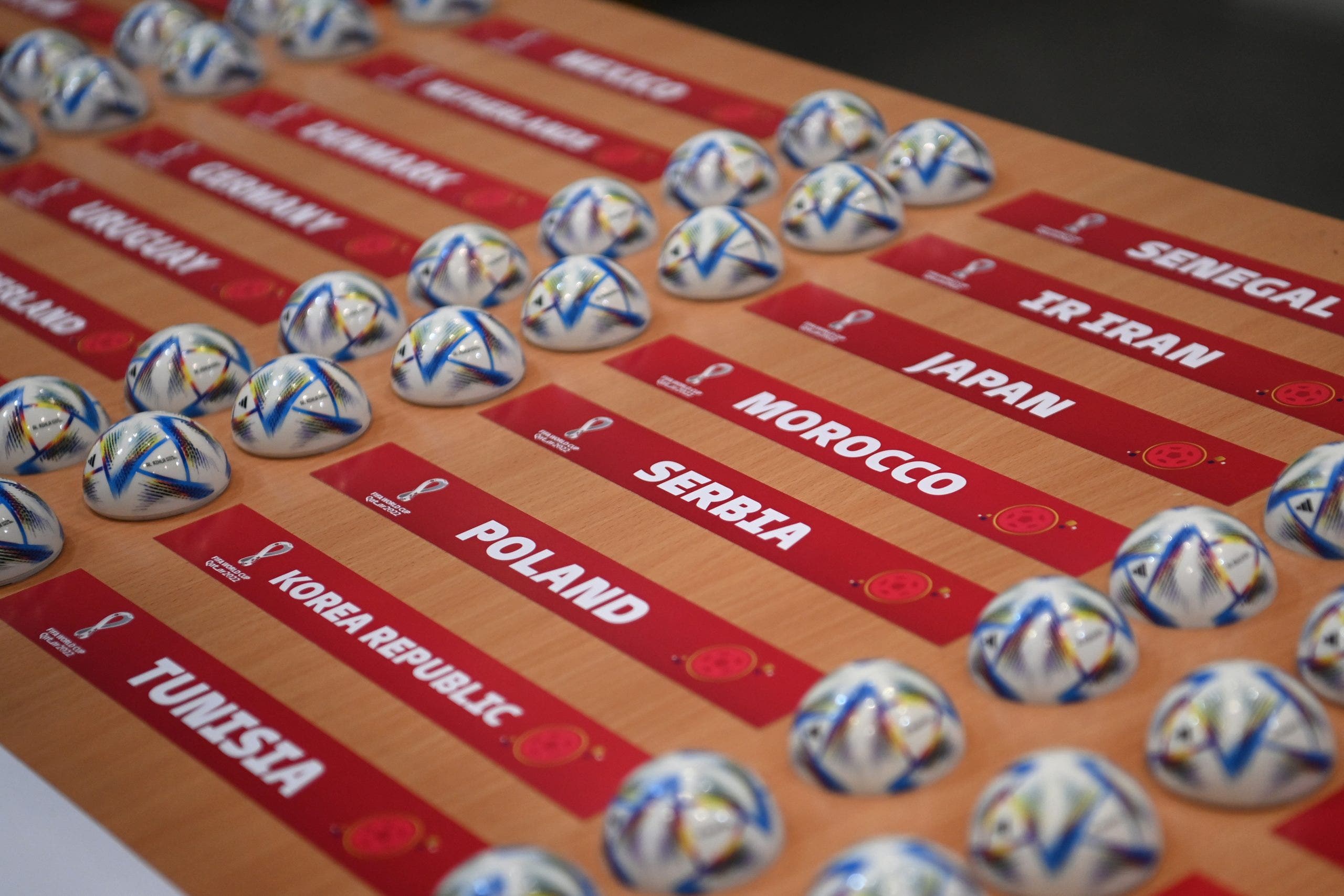
Team names during the 2022 World Cup draw in Qatar. (Photo by Michael Regan – FIFA/FIFA via Getty Images)
Each team’s name is written on a slip of paper inside a plastic ball and put in large glass bowls (pots) numbered 1-4. A representative (often a soccer legend or celebrity) will then draw one ball from each pot, open it up, and call out the country’s name.
A computer then allocates each team drawn at random to its appropriate group based on the geographical restrictions in place for the event.
All teams will know who their group-stage opponents are, the schedule of those games as well as the location and stadium.
Are the USA, Canada, and Mexico Already in Groups?
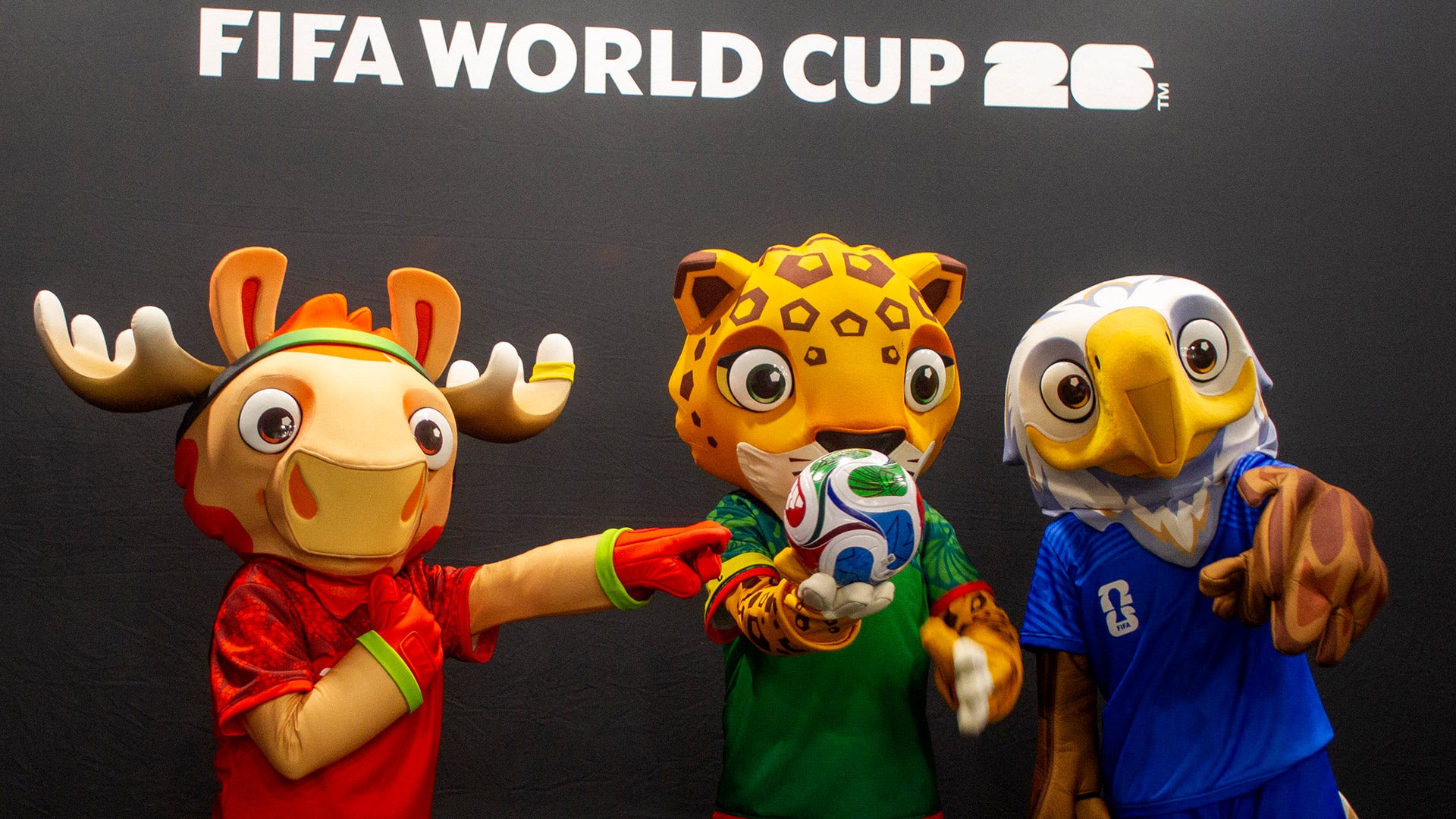
The three mascots of the co-hosts of the 2026 World Cup. (FIFA/Getty Imags)
The three co-hosts of the 2026 World Cup are already placed in respective groups, even if we still don’t know their opponents. This was done to ensure that the teams would play their group stage matches in their respective countries.
For the USA, the three group-stage games will be on June 12 (in Los Angeles), June 19 (in Seattle), and June 25 (in Los Angeles.
For Canada, the three-group stage games will be on June 12 (in Toronto), June 18 (Vancouver), and June 24 (Vancouver). For Mexico, the three-group stage games will be on June 11 (in Mexico City), June 18 (Guadalajara), and June 24 (Mexico City).
Group A: Canada, TBD, TBD, TBD
Group B: Mexico, TBD, TBD, TBD
Group D: United States, TBD, TBD, TBD
Group C, along with Groups E through L, have yet to be assigned.
What is the Intercontinental Playoff?
Six teams will participate in a mini-tournament of their own to qualify for the big stage, with Europe (UEFA) not taking part in this event. This event will take place in March 2026, and reportedly will take place at two neutral venues in Mexico.
- 1 Africa (DR Congo)
- 1 Asia (Iraq)
- 2 North and Central America/Caribbean (Jamaica, Suriname)
- 1 Oceania (New Caledonia)
- 1 South America (Bolivia)
These six teams will be placed in two separate three-team brackets. The two teams with the highest FIFA rankings will get byes to the two separate finals. The other four teams will face each other to reach those finalists. The two teams to emerge from this playoff round will go to the World Cup.
What is the UEFA Playoff?
As for Europe (UEFA), it will have its own playoff tournament to finalize the last four teams from the region who will go to the World Cup.

Remember, 12 European teams will head directly to the World Cup, having won their respective four-team qualifying groups. The runner-ups of those 12 groups will be joined by four other lower-ranked European teams based on their Nations Leagues standings. These 16 teams will then be bracketed into a mini-tournament of their own in March 2026 to decide those remaining four World Cup spots.
Much like the World Cup, the UEFA playoff format will see the participating teams placed into pots. The four highest ranked teams based off FIFA’s World Rankings will be in Pot 1. The next four highest ranked teams will go into Pot 2. The same goes for Pots 3 and 4.
Teams from Pot 1 host Pot 3 teams, while teams from Pot 2 will host Pot 4. The winners advance to play for the four remaining World Cup spots (called paths A, B, C, and D), with the higher-ranked team hosting.
Based on current FIFA rankings, these would be the pots:
Pot 1
- Italy
- Denmark
- Türkiye
- Ukraine
Pot 2
- Poland
- Wales
- Czechia
- Slovakia
Pot 3
- Ireland
- Albania
- Bosnia and Herzegovina
- Kosovo
Pot 4
- Romania
- Sweden
- North Macedonia
- Northern Ireland
What is the Schedule for the World Cup?
| Stage | Dates |
| Group Stage | June 11–27 |
| Round of 32 | June 28–July 3 |
| Round of 16 | July 4–7 |
| Quarterfinals | July 9–11 |
| Semifinals | July 14–15 |
| Third-Place Play-Off | July 18 |
| Final | July 19 |
Which Teams Have Qualified for the World Cup?
Listed by geographical region, with their appearance total including the 2026 World Cup:
Asia (AFC; 8 eight teams)
- Australia (7 appearances)
- Iran (7 appearances)
- Japan (8 appearances)
- Jordan (will make debut in 2026)
- Qatar (2 appearances)
- Tunisia (7 appearances)
- South Korea (12 appearances)
- Uzbekistan (will make debut in 2026)
Africa (CAF; 9 teams)
- Algeria (5 appearances)
- Cape Verde (will make debut in 2026)
- Egypt (4 appearances)
- Ghana (5 appearances)
- Ivory Coast (4 appearances)
- Morocco (7 appearances)
- Senegal (4 appearances)
- South Africa (4 appearances)
- Tunisia (7 appearances)
Europe (UEFA; 12 teams)
- Austria (6 appearances)
- Belgium (15 appearances)
- Croatia (6 appearances)
- England (16 appearances)
- France (17 appearances)
- Germany (21 appearances)
- Netherlands (12 appearances)
- Norway (4 appearances)
- Scotland (9 appearances)
- Spain (17 appearances)
- Switzerland (13 appearances)
- Portugal (9 appearances)
North America, Central America, Caribbean (CONCACAF; 6 teams)
- Canada (co-hosts; 3 appearances)
- Mexico (co-hosts; 18 appearances)
- United States (co-hosts; 12 appearances)
- Haiti (2 appearances)
- Curaçao (will make debut in 2026)
- Panama (2 appearances)
South America (CONMEBOL; 6 teams)
- Argentina (19 appearances)
- Brazil (23 appearances)
- Colombia (6 appearances)
- Ecuador (5 appearances)
- Paraguay (8 appearances)
- Uruguay (14 appearances)
Oceania (OFA; 1 team)
- New Zealand (3 appearances)
Want great stories delivered right to your inbox? Create or log in to your FOX Sports account and follow leagues, teams and players to receive a personalized newsletter daily!


