


One of Europe’s longest dictatorships will be thrust to the forefront of public debate in Spain on Thursday as the country marks 50 years since General Francisco Franco’s death. AFP looks back at the dictator’s repressive 36-year regime, which continues to divide Spain.
Civil War
Franco rose to power during the Spanish Civil War, which began in 1936 when he led a coup against the country’s left-wing Republican government.
A three-year battle ensued, pitting Franco’s Nationalist rebels, backed by Fascist Italy and Nazi Germany, against the Soviet-backed Republicans.
The Nationalists won the conflict, which ended in 1939 with hundreds of thousands of dead.
Among the killing sites was the Basque town of Guernica, which was bombed by German warplanes — an atrocity immortalised in a haunting painting of the same name by Spanish master Pablo Picasso.
In his book “The Spanish Holocaust”, historian Paul Preston estimated that 200,000 people died in combat during the conflict, and another 200,000 were murdered or executed — 150,000 at the hands of the Nationalists.
Atrocities were also committed by the Republican side.
After World War II broke out, Franco held talks with Adolf Hitler on joining the Axis powers but ultimately decided against direct military involvement.
READ ALSO: Inside Spain – How Franco disinformation flourishes online
Executions and stolen babies
Franco ruled for another three decades with the backing of the military and the Catholic Church.
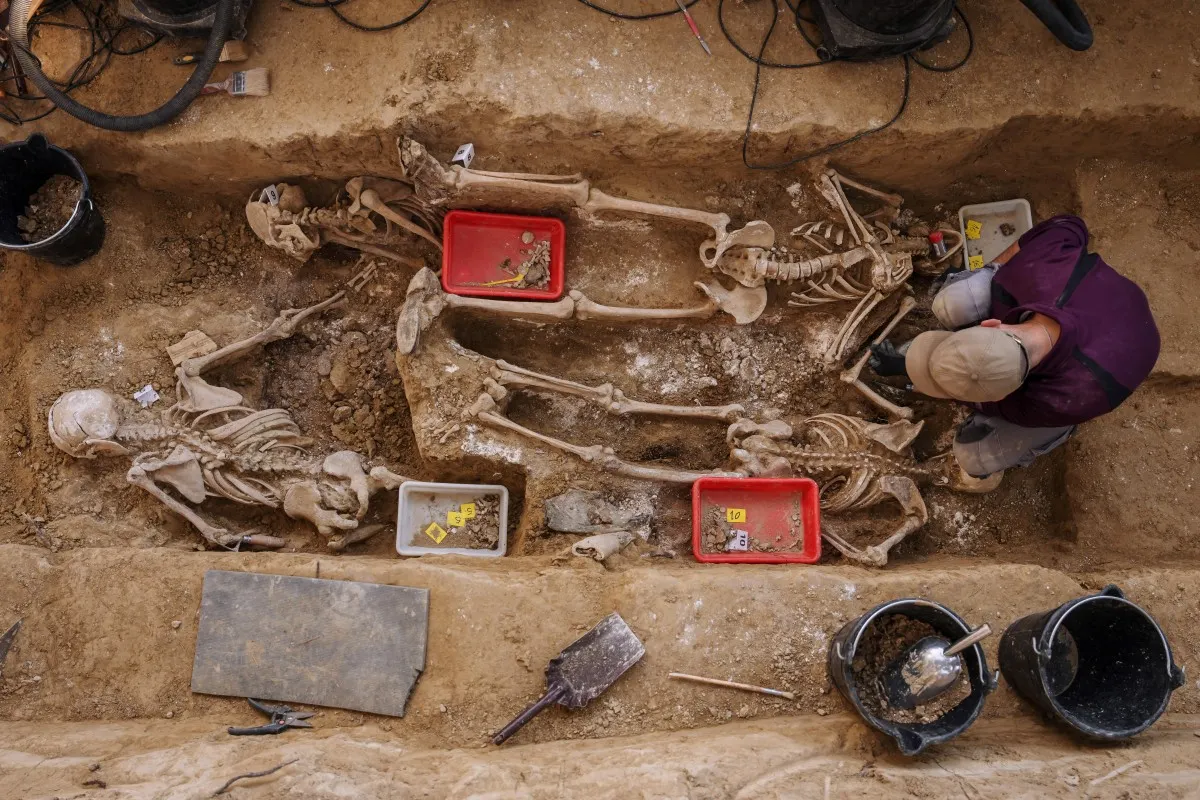
During his first five years in power, he executed tens of thousands of Republican prisoners and dumped their bodies in mass graves.
Spain’s prison population shot up and half a million people fled the country as their property was seized.
Newborns were snatched from opponents and poor families to be passed on to other couples, many of them close to Franco’s regime.
Campaigners estimate there were thousands of “stolen babies” over the decades.
Advertisement
Reckoning with the past
After Franco’s death on November 20, 1975, King Juan Carlos succeeded him as head of state and led the transition from dictatorship to democracy.
The authorities opted for what became known as a “pact of forgetting” over the dictatorship’s crimes, to avoid a spiral of score-settling between Franco supporters and opponents.
A major shift took place under Socialist Prime Minister Pedro Sánchez, who has driven efforts to commemorate those who died or suffered violence or repression during the civil war and dictatorship.
One of his most controversial moves was to remove Franco’s remains from a vast hillside mausoleum north of Madrid that drew right-wing sympathisers and move them to a more discreet family tomb.
Right-wing parties have accused Sánchez of needlessly dredging up the past and vowed to reverse a 2022 law that commits the state to searching for victims of the dictatorship buried in unmarked graves.


