


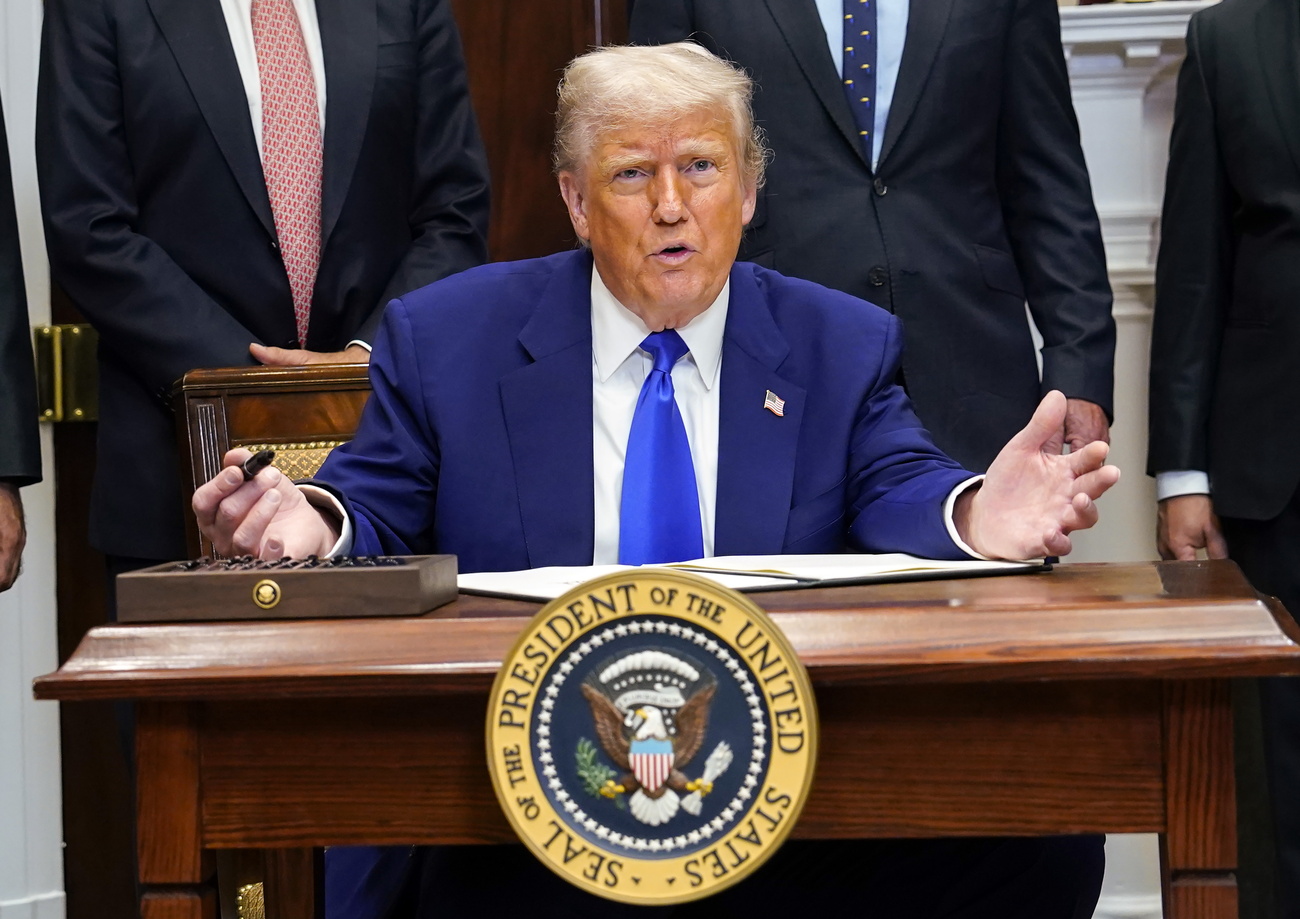
US President Donald Trump signed an executive order to lower the cost of medication on May 12, 2025.
Keystone
United States President Donald Trump’s planned tariffs on pharmaceuticals have disrupted the industry. Here’s a timeline of developments affecting this sector since he came into office in January 2025.

Traditionally opaque negotiations for drug prices have left Americans paying two to three times more for patented drugs than Europeans do on average. US President Donald Trump has been pulling out all the stops and using tariffs (from which drugs have historically been exempted) as a bargaining tool to force industry leaders to lower prices and reshore production in his country.
As a result, pharmaceutical companies have announced billions of dollars’ worth of investments in the US. Some manufacturers have also said they will lower prices for consumers by leaving out the middlemen.
More
More
US trade deal forces reckoning for Swiss pharma powerhouse
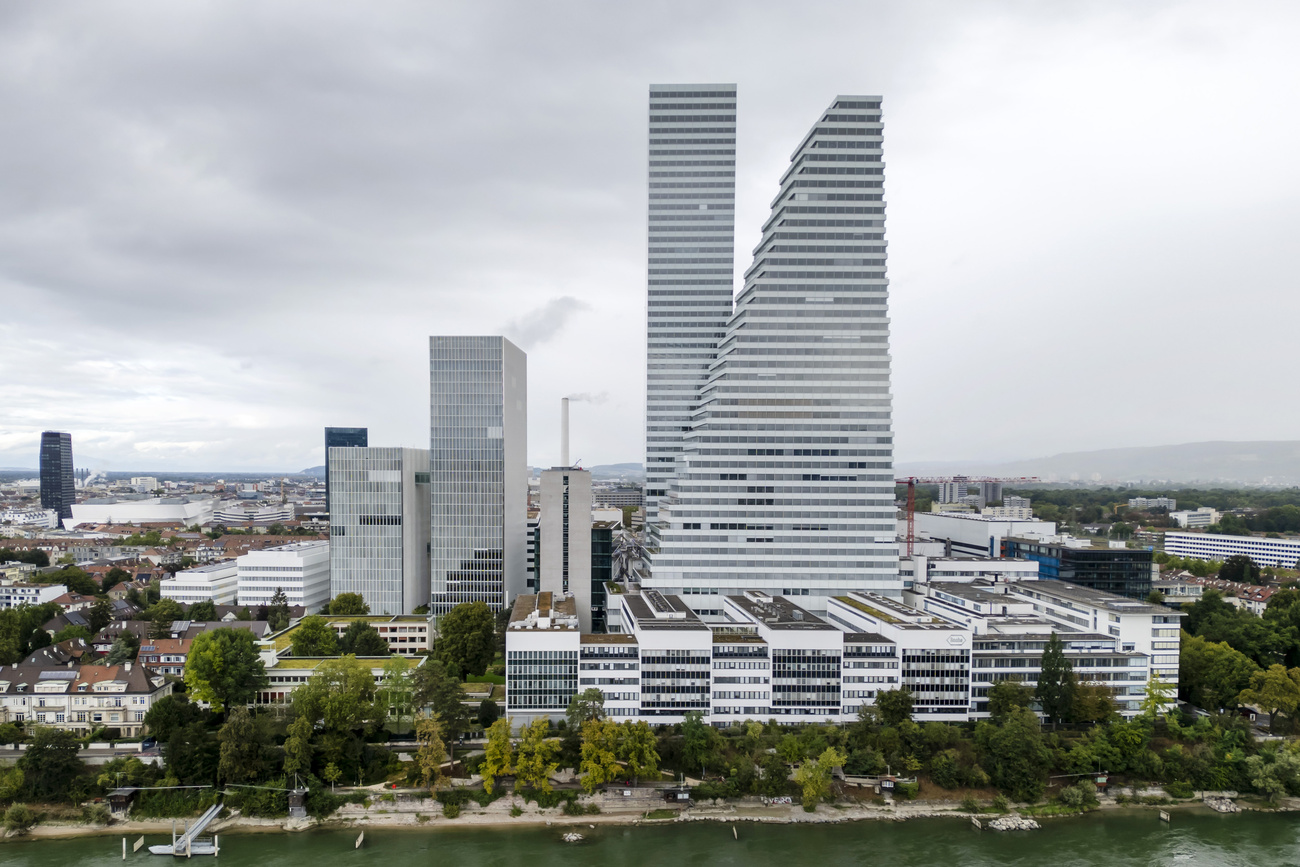
Most pharmaceutical products are still exempt from tariffs and big producers will likely be able to absorb shocks. But experts predict smaller companies will be hardest hit. In Switzerland, pharmaceutical products account for nearly 40% of all exports, but the country negotiated a deal with the US in mid-November, according to which its drug companies won’t be subject to more than a 15% tariff.
Key events for pharma industry since Trump took office on January 20, 2025
January 27: Trump announces new import tariffs on pharmaceuticals, computer chips and semiconductors without specifying the rates that will apply.
February 18: Trump announces incoming tariffs of at least 25% on pharmaceuticals and semiconductors, to come into effect over the course of the year.
February 26: American drug manufacturer Eli Lilly pledges $27 billion (CHF21.5 billion) in investments in the US at an event featuring speakers from the Trump administration.
March 21: Johnson & Johnson says it plans to invest $55 billion over the next four years to build four new plants in the US.
April 1: The US Department of Commerce launches a Section 232 investigation to determine whether the import of pharmaceuticals, including active pharmaceutical ingredients, derivatives and finished products, poses a “national security” threat.
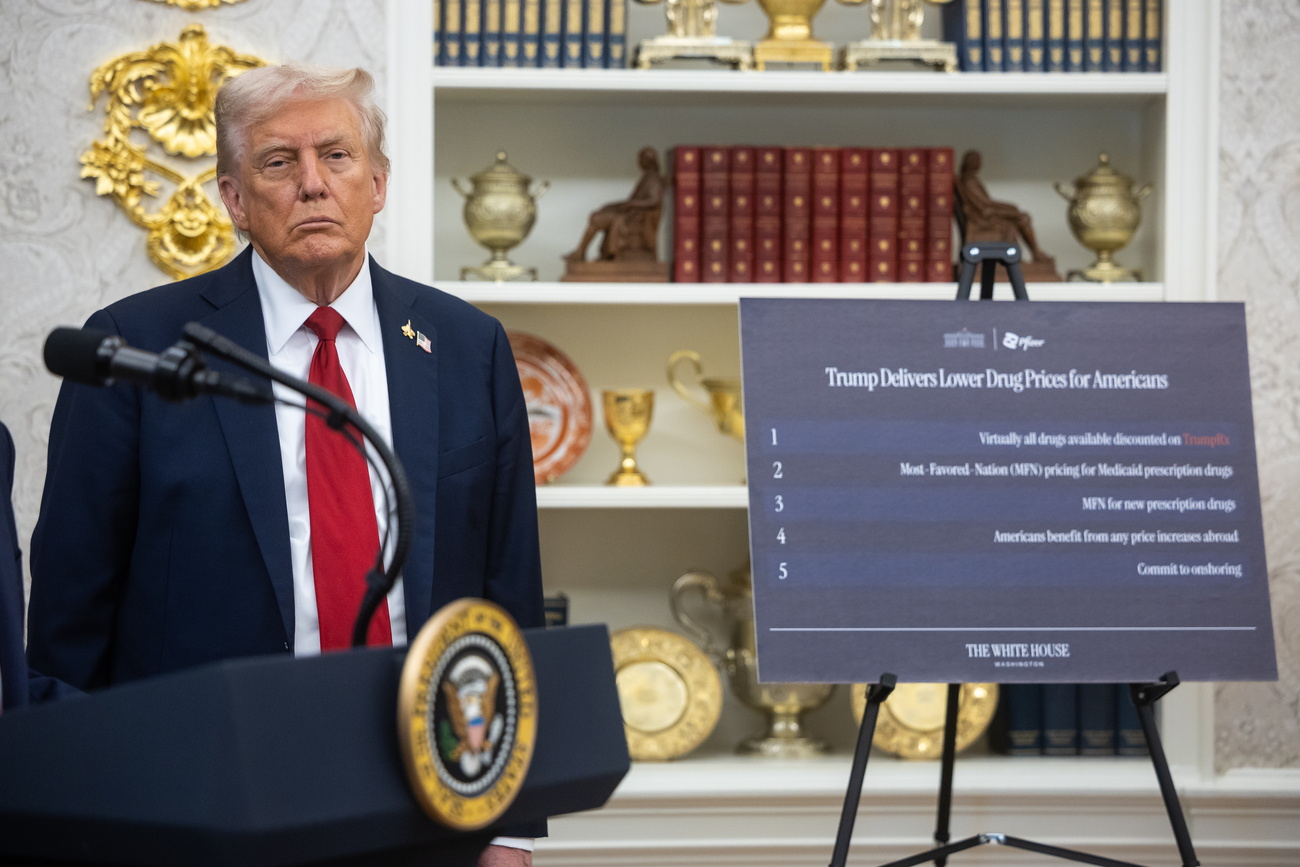
US President Donald Trump stands near a sign on lowering drug prices for Americans as he announces a drug-pricing deal with Pfizer in the Oval Office at the White House in Washington, DC, USA, 30 September 2025.
Keystone
April 2: Pharmaceuticals are among a handful of products excluded from reciprocal American tariffs targeting 57 countries. Switzerland is threatened by taxes of 31%.
April 5: Swiss pharma giant Novartis announces a $23-billion investment in the US to set up two innovation hubs, four manufacturing facilities and create 1,000 jobs, so that “all key Novartis medicines for US patients will be made in the United States”.
April 8: In a self-proclaimed “breaking news” announcement at a fundraising dinner for the Republican Party, Trump teases “a major tariff on pharmaceuticals”, and says “we’re going to tariff our pharmaceuticals and once we do that they’re going to come rushing back into our country because we’re the big market”.
More
More
How pharma became Switzerland’s Achilles heel in US trade talks
The next day, reciprocal tariffs on all countries except China are paused until July 9.
April 11: Executives from 32 pharma multinationals sign a letter asking the president of the European Commission, Ursula von der Leyen, to simplify regulations and support the industry in Europe.
April 15: Trump signs an executive order (a directive that asks the government to take specific actions) to lower drug prices by “bringing radical transparency and competition to prescription drug markets”. The order seeks to increase the availability of generics and cut pharmaceutical benefit managers (PBMs), middlemen who negotiate prices between insurers, employers and drug manufacturers in the US.
April 22: Swiss pharma giant Roche announces a $50-billion investment in the US over the next five years and says it will eventually have the capacity to export more products from the US to the rest of the world than it currently ships to the US.
At least 15 different pharma companiesExternal link have announced billion-dollar investments ranging from expanding research and development capacities to building new production facilities and creating jobs in the US. These include biotech firms, generics manufacturers and multinationals. While some commitments don’t include a timeline, most companies are making pledges, which means their plans will span over several years.
May 5: Trump signs an executive order for the administration to reduce regulatory delays and encourage domestic production.
May 8: The United Kingdom negotiates the first deal with the US, with a 15% baseline tariff. Pharma tariffs will depend on the Section 232 probe of pharmaceutical imports into the US.
May 12: Trump signs an executive order for the administration to follow Most-Favored-Nation prices (MFN) for branded drugs.
The policy aligns price tags to the lowest prices paid by peer countries. Manufacturers have 30 days to join the MFN policy.
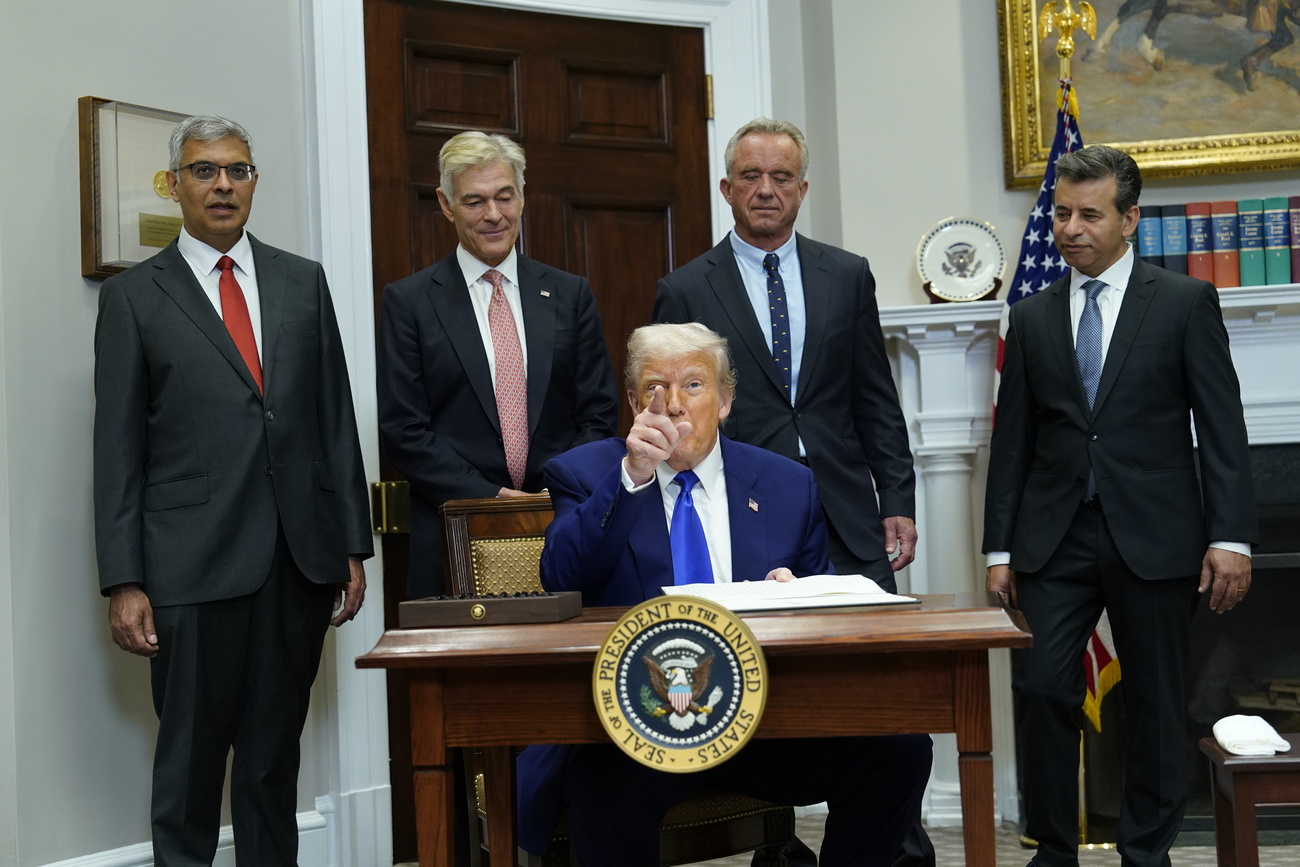
US President Donald Trump signs an executive order to lower prescription drug costs on May 12, 2025 as Jay Bhattacharya, Director of the National Institutes of Health, Mehmet Oz, Administrator for the Centers for Medicare & Medicaid Services, Robert Kennedy Jr, US Health Secretary, and Marty Makary, the commissioner for the U.S. Food and Drug Administration (FDA), look on.
Keystone
May 14: French drug manufacturer Sanofi plans to invest at least $20 billion in the US over the next five years.
June 24: Norwegian company Novo Nordisk plans to invest $4.1 billion in North Carolina.
July 8: Trump threatens 200% tariffs on pharmaceuticals “but in a year or a year and a half’s time”, during a cabinet meeting.
July 21: Anglo-Swedish pharma giant AstraZeneca announces $50 billion for its “largest single manufacturing investment in the world” that will be set up in the state of Virginia.
July 22: A trade deal between Japan and the US plans Japanese investments totalling $550 billion in projects chosen by the US government if Japan it wishes to see import tariffs of 15% maximum on its goods. These would be the lowest rate among US trading partners. Generics are exempted from the deal.
July 31: Trump sends 17 pharma companies letters outlining the binding commitments they must make until September 29 to align with MFN prices.
“If you refuse to step up, we will deploy every tool in our arsenal to protect Americans from abusive drug pricing practices,”
US President Donald Trump on July 31
August 21: The European Union and the US formalise a base tariff of 15% on imports. Pharmaceuticals are capped at 15% and generics are exempted starting September 1.
September 17: British manufacturer GSK invests $1.2 billion to start building a new factory in Pennsylvania in 2026.
September 25: President Trump announces 100% tariffs on branded or patented pharmaceutical products entering the US from October 1, “unless a Company IS BUILDING their Pharmaceutical Manufacturing Plant in America”, he writes.
September 29: On the last day for the 17 drug manufacturers who received letters from Trump to make commitments in the US, Pfizer announces a $70-billion investment in the country and becomes the first pharma company to sign a deal with the administration based on the MFN policy.
The firm is exempted from tariffs for a three-year period and will sell some of its drugs on the direct-to-consumer website TrumpRx.gov, bound to launch in 2026, for about 85% less than the price they currently go for.
October 1: Tariffs of 100% on patent-protected drugs entering the US aren’t applied as planned.
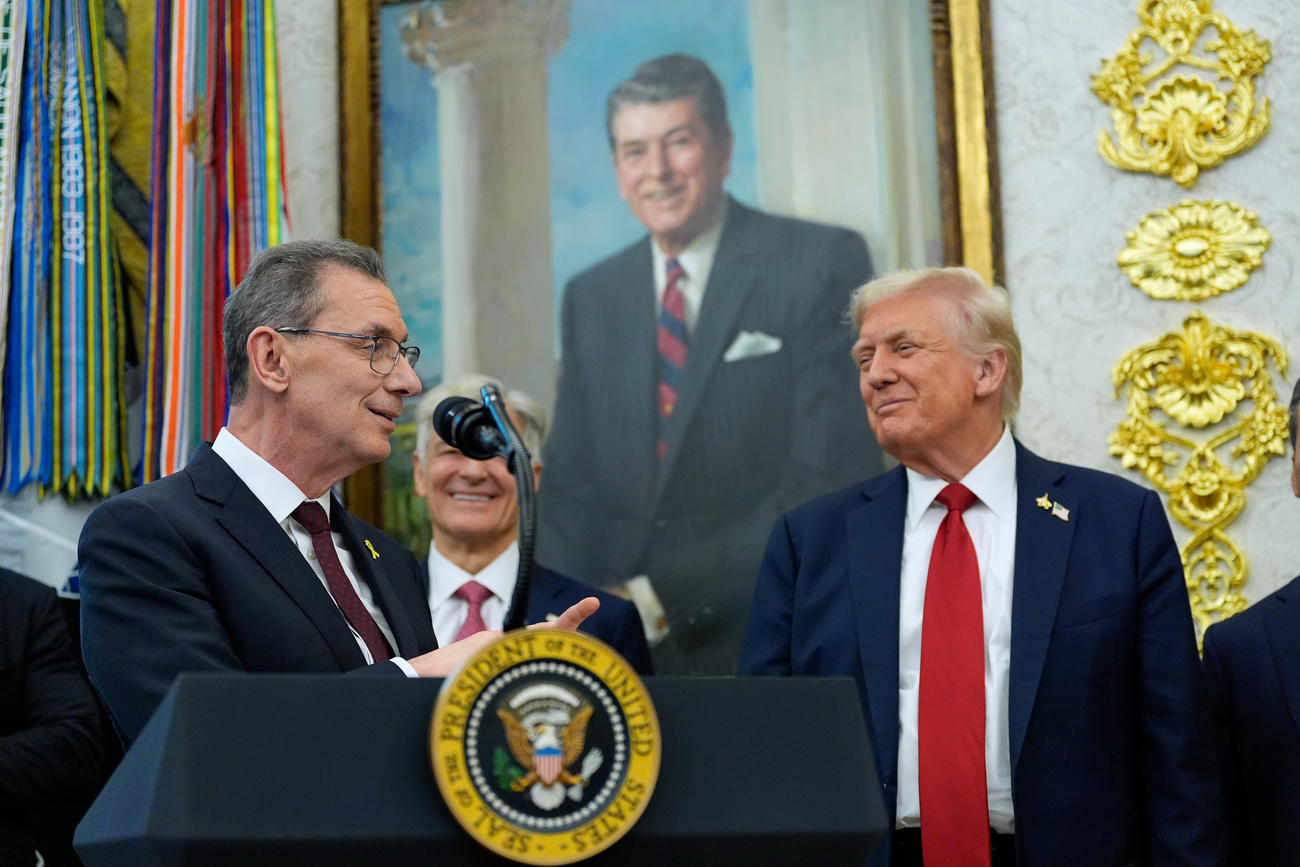
Albert Bourla, chairman and chief executive officer of Pfizer struck a deal with the US on September 30, 2025
Copyright 2025 The Associated Press. All Rights Reserved
“While we’re negotiating with these companies, we’re going to let [the talks] play out and finish these negotiations, because they are the most important thing to the American people”, says Commerce Secretary Howard Lutnick two days before the deadline.
October 10: Astra Zeneca announces a $50-billion investment in the US and signs a deal with the administration based on the MFN policy, exempting the company’s products from tariffs for three years.
October 16: In-vitro fertility medication by German manufacturer Merck, known as EMD Serono in the US, will be sold at a discount on TrumpRx.gov, following a deal with the US government that exempts the company from tariffs.
November 6: Manufacturers Elli Lilly and Novo Nordisk agree to lower the prices of their diabetes and weight-loss drugs and receive a three-year reprieve from tariffs.
November 15: Switzerland, Liechtenstein and the US issue a joint statement that stipulates American reciprocal tariffs won’t exceed 15%, including for pharmaceutical products.
In exchange, Liechtenstein will invest $300 million and Swiss companies will invest at least $200 billion across the 50 US states. One-third of these investments will take place by the end of 2026, the rest within the next five years.
More
More
Switzerland secures US tariff rate cut to 15%
Edited by Virginie Mangin/gw


