

Language proficiency rules don’t apply equally to all foreigners, and government seeks to harmonise rules for obtaining Swiss citizenship — these are among the news that The Local reported this week. You can catch up on everything in this weekly roundup.
Foreign nationals are not bound by the same language proficiency rules
The general requirement for all foreigners working in Switzerland is to have a certain level of proficiency in a national language to qualify for their residency permit.
However, this requirement is not applied ‘equally’ to all.
The largest group exempted from the language requirement – at least for the B permit – are the nationals of the European Union and EFTA (Norway, Iceland, and Liechtenstein) – that is, all foreigners covered by the Agreement on the Free Movement of People.
But, in certain cases, the language rule is also waved for third-country nationals working in certain professions or industries.
READ ALSO: How Switzerland’s language rules for residency can depend on your job
Switzerland to harmonise rules for obtaining citizenship
In Switzerland, naturalisation requirements vary from one canton to another, making the process of becoming a citizen more onerous for foreigners. But this could change in the future.
While the State Secretariat for Migration (SEM) has set federal criteria for obtaining citizenship, individual cantons have the right to devise their own naturalisation rules – as long as these requirements don’t conflict with, or are more lenient than, those set by the federal government.
However, there is a move is underway in Switzerland to unify the naturalisation rules – specifically, the government has asked the cantons to “examine together how to simplify and harmonise the naturalisation procedure.”
READ MORE: How harmonising Swiss naturalisation rules could help foreigners get citizenship
Advertisement
New EU treaty many grant welfare benefits to more foreigners
The new agreements reached between Bern and Brussels concluded in December 2024 will grant EU nationals in Switzerland even more sweeping rights than they currently enjoy.
Specifically, Switzerland will have to be more accommodating towards EU migrants needing social assistance.
This means that if EU/EFTA citizens coming to live in Switzerland cannot support themselves, they would be entitled to receive public assistance – without ever having contributed to the country’s social security scheme.
If the agreements come into force, the government expects 3,000 to 4,000 new cases of social assistance among immigrants per year.
READ MORE: Will more foreign residents be eligible for Swiss welfare benefits?
Advertisement
Switzerland’s wealth is not equally distributed
Switzerland is considered one of the richest countries in the world, yet the distribution of that wealth is increasingly unequal.
Studies sow that the richest 1 percent of the population in Switzerland owns over 31 percent of total private wealth, while the poorest half owns just 3.7 percent.
The gap appears enormous even in absolute terms: half the population has an average of 25,000 francs per capita, while the richest 1 percent possess over 21 million francs per capita.
READ MORE: How Switzerland’s huge wealth is far from evenly spread
Advertisement
What the Swiss will vote on in cantonal and municipal referendums?
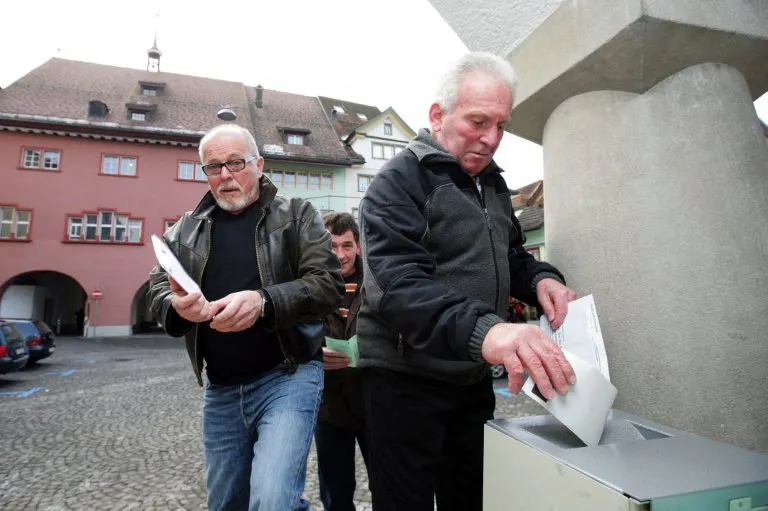
On November 30th, Swiss citizens will cast their ballots on national issues, but will also vote on topics of regional importance.
For instance in Vaud and Appenzell Ausserrhoden, citizens will have their say on whether foreign residents in those cantons can be granted voting rights.
In Zurich, two issues will be among several on the ballot: one, on the future development of the housing market and two, who will have the last say on implementing 30 km/h speed limits.
And in Geneva, an initiative calls for an annual check for 300 francs to cover dental visits. This check would be given to individuals eligible for health insurance premium reductions but who do not receive any other form of social assistance.
READ MORE: What’s at stake in Switzerland’s upcoming local referendums
Advertisement
US could lower Swiss trade tariffs – at last
Switzerland made several unsuccessful attempts to persuade president Trump to reduce the steep customs duties he had imposed on Swiss imports to the United States.
But now the US is ready to relent.
After Swiss business leaders recently met with Trump in Washington, he appears to have softened.
As reported by US media, “the president confirmed that White House officials were working on a deal to get the tariffs a little lower.”
READ MORE: Trump says US ready to ‘help Switzerland’ on steep tariffs


