


Switzerland’s national rail company, SBB, will depoy 116 new double-decker trains on certain routes in both German- and French-speaking parts of the country.
Manufactured by Siemens Mobility, 95 of the new trains will operate on the Zurich S-Bahn network from 2030.
The remaining 21 trains will serve the Vaud S-Bahn and RE33 cross-border lines between Martigny (Valais) and Annemasse (France).
“The new trains offer significantly more space,” the SBB said in a press release on November 6th. “Each train is approximately 150 metres long and has around 540 seats, as well as eight multi-purpose areas for standing or storing bicycles, luggage, and strollers.”
During peak hours, the trains will run at twice their original length, providing 45 additional seats and over 30 percent more standing room.
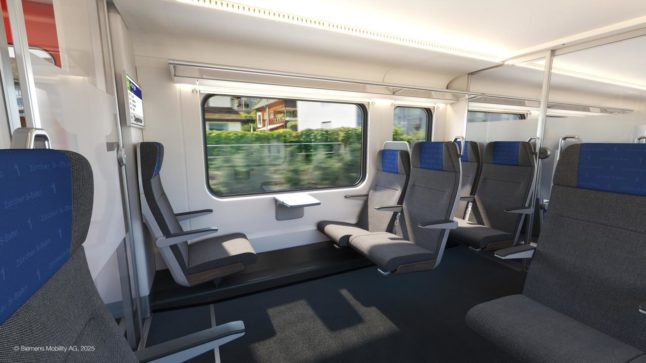
The interior of the new double-decker train. Photo Siemens Mobility AG / SBB media
New multi-purpose areas and other features
The double-decker trains are specifically designed to meet the needs of commuters but also offer a high level of comfort for leisure travellers, the SBB said.
“Thanks to spacious multi-purpose areas, passengers can board and get off quickly on the often very short routes in urban areas. At the same time, leisure travellers with luggage or those traveling with children are offered more space.”
Furthermore, larger screens will be installed to improve passenger information, and a light strip will indicate the correct side to exit the train.
Advertisement
Other advantages of the new vehicles:
- Lower floor access at all doors, making boarding easier for all passengers.
- More comfort in first class thanks to adjustable seats, fold-down tables, and more legroom.
- Power outlets in the seats in both first and second class, allowing passengers to charge their devices during the journey. Multifunctional areas also have outlets for charging e-bikes.
- Additional emergency call buttons, allowing passengers to quickly request assistance if needed.
- Two toilets per train, one of which is accessible to passengers with reduced mobility


