


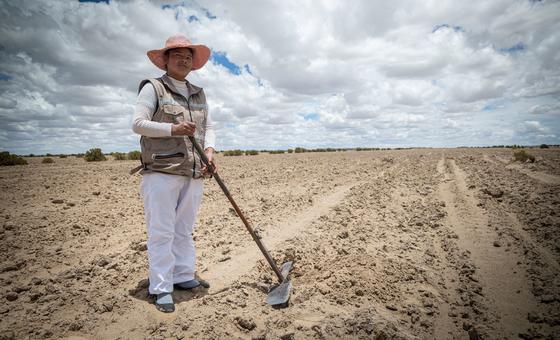
The finding comes in the latest State of Food and Agriculture (SOFA) report by the UN Food and Agriculture Organization (FAO), released on Monday in Rome.
“The report delivers a clear message: land degradation is not just an environmental issue – it impacts agricultural productivity, rural livelihoods and food security,” the UN agency said.
Human activity driving degradation
Land is the core of agrifood systems, supporting over 95 percent of food production in addition to providing essential ecosystem services that sustain life on the planet.
Land degradation typically results from a combination of factors, FAO explained, including natural drivers such as soil erosion and salinization.
However, human activities such as deforestation, overgrazing, and unsustainable irrigation practices, are now among the leading contributors.
Measuring the impact
To measure degradation, the report compared current values of three key indicators – soil organic carbon, soil erosion, and soil water – against conditions that would exist without human activity under native or natural states.
The data was processed through a machine-learning model that integrates environmental and socio-economic drivers of change to estimate the land’s baseline condition in the absence of human activity.
The report estimates that around 1.7 billion people worldwide live in areas where crop yields are 10 per cent lower due to human-driven land degradation. They include 47 million children under the age of five who are suffering from stunting.
“In absolute numbers, Asian countries are the most affected – both because of their accumulated degradation debt and their high population densities,” FAO said.
Millions could benefit
The report outlines actionable opportunities for integrated sustainable land-use and management practices, alongside tailored policies.
By reversing just 10 per cent of human-induced degradation on existing croplands through crop rotations or other sustainable land management practices could produce enough to feed an additional 154 million people a year.
“To seize these opportunities, we must act decisively. Sustainable land management requires enabling environments that support long-term investment, innovation and stewardship,” FAO Director-General Dongyu Qu wrote in the report’s foreword.


