

How foreign nationals are a boost Swiss economy, and a new treaty to allow EU citizens to live in Switzerland with ‘no conditions attached’ — these are among the news that The Local reported this week. You can catch up on everything in this weekly roundup.
Foreign nationals are a boost Switzerland’s economy
Research has shown the positive impact that immigrants have on Switzerland’s famously stable economy.
For instance, a joint study by the Federal Polytechnic Institute in Lausanne (EPFL) and the University of Geneva, reiterates just how essential the foreign workforce is for the country.
It found that today’s immigrants are typically highly skilled and have the same cultural background as native Swiss people.
The study also reported that about 60 percent of people who migrate to Switzerland with a B or C permit have a college degree. The remaining 40 percent have a middle- or lower-level education and work mainly in the services sector which has been suffering from staff shortages – including healthcare, social services, hospitality and construction.
READ ALSO: How immigrants keep Switzerland’s economy running
New treaty to allow EU citizens to live in Switzerland with ‘no conditions attached’
Thanks to an extension of the free movement of persons agreement between Bern and Brussels, EU citizens will have the right of permanent residence in Switzerland after just five years – even if they don’t have a job.
In the new series of treaties that Switzerland concluded with the European Union in December 2024, Bern committed to expanding the agreement on free movement of people.
What would be different from now, however, is that no conditions would be attached – in other words, having a job in Switzerland would no longer be a prerequisite for a EU or EFTA passport holder wanting to settle in the country.
READ ALSO: Will half a million foreigners get the Swiss ‘C’ permit with no conditions attached?
Advertisement
Violence has become more prevalent on Swiss trains – the government vows action
Increasingly serious cases of violence are reported on Switzerland’s trains, prompting the government to take steps to guarantee the safety of both commuters and staff.
“These assaults have become an alarming daily occurrence,” according to MP Piero Marchesi, who, along with 15 other lawmakers, has filed a motion in the parliament to boost security on Swiss trains.
In response to Marchesi’s motion, the Federal Council has approved a plan to strengthen security on Swiss trains to better protect passengers and railway staff.
READ ALSO: How safe are passengers travelling on Swiss trains?
Switzerland named the world’s ‘ most competitive’ nation – again
After already nabbing the top spot in another international ranking earlier in 2025, Switzerland has once again been named the most competitive country in the world.
The Competitiveness Report 2025, by the Eight Competitiveness Lab international think tank, found that “Switzerland ranks at the top globally, driven by its strong education system and societal foundations, while also maintaining impressive economic resilience and high sustainability performance.”
In June, another study, World Competitiveness Ranking, also places Switzerland in the 1st place.
READ ALSO: Why Switzerland is (still) the world’s most competitive nation
Advertisement
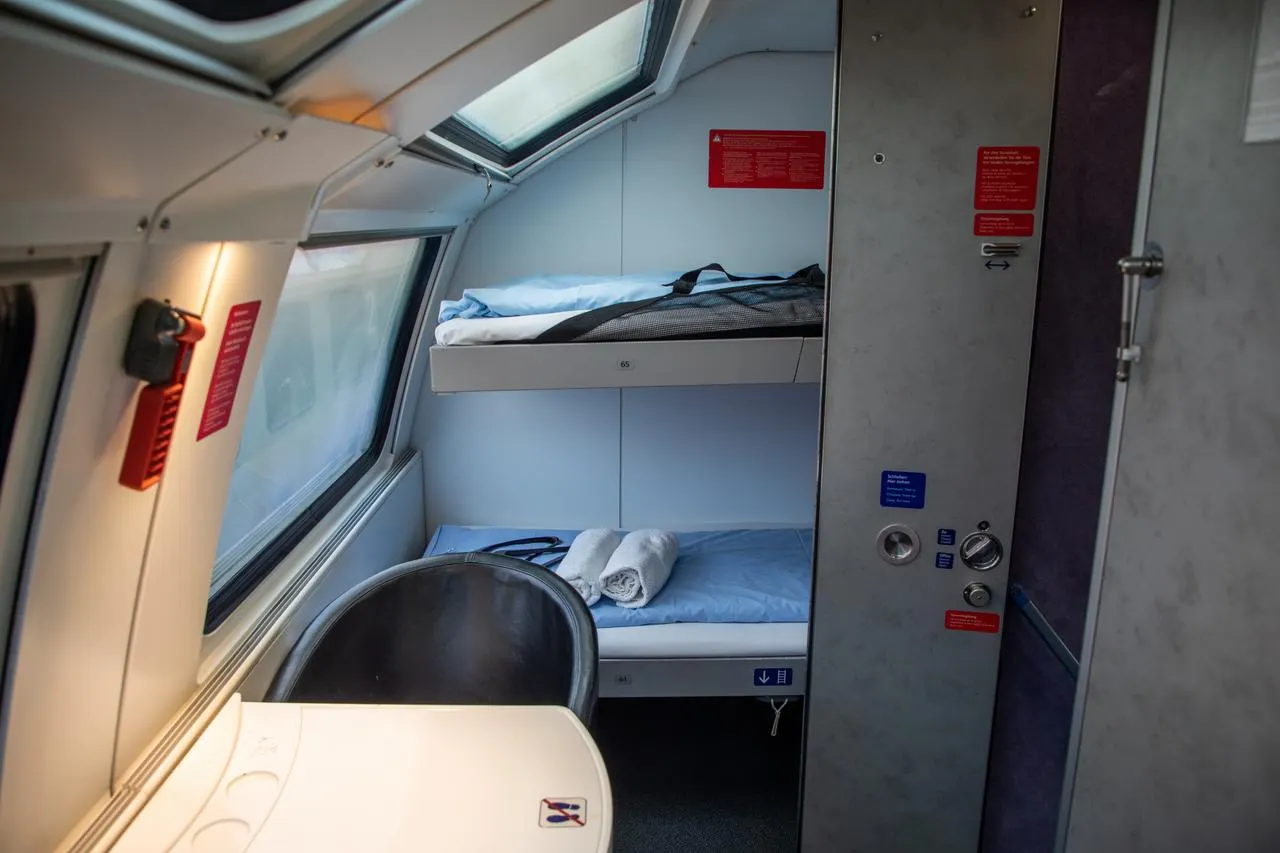
A night train between Switzerland and Sweden to launch in 2026
After months of uncertainty about the future of night trains, Swiss railway company SBB has revealed the details of its upcoming service to Malmö via Copenhagen, departing from Basel.
In partnership with RDC Deutschland, SBB will offer, from April 15th, 2026, a night train “from Basel SBB to Copenhagen and Malmö, all year round, three times a week and in both directions,” the company said.
Tickets for the Malmö-bound EuroNight train will go on sale from November 4th, 2025, on the SBB Mobile app, on SBB.ch and in SBB travel centres.
READ ALSO: Swiss national railway unveils new night train to Sweden via Denmark and Germany
Advertisement
Swiss cantons where residents are most likely to be victims of thefts
A study by AXA Insurance reveals that the risk of burglary depends on the canton of residence.
The research shows that, in this respect, people living in the French-speaking part of the country are targeted more often by burglars than their counterparts in the Swiss-German cantons.
For instance, the risk of being targeted by burglars in Geneva has been more than twice the national average of 3.2 burglaries per 1,000 households.
In this canton, there are typically 8.5 burglaries per 1,000 households in one year.
READ ALSO: Where in Switzerland you are most likely to be burgled


