


Addressing the UN Trade and Development (UNCTAD)’s 195 Member States in Geneva, Rebeca Grynspan said that 72 per cent of global trade “still moves under WTO rules” – a reference to the World Trade Organization, whose agreements are negotiated and signed by trading nations.
“We have for now avoided the domino effect of tariff escalation that once brought the world economy to its knees in the 1930s,” Ms. Grynspan told UNCTAD members gathering in Geneva to continue efforts to lift millions out of poverty through trade.
“This didn’t happen by accident, it happened because of you, because you kept negotiating when it seemed pointless, defending a rules-based system even as you were to reform it, and building bridges even when they fell.”
‘Impossible choices’
The UNCTAD chief’s comments follow months of global economic uncertainty amid declarations of tariff impositions on trading partners of the United States.
In recent comments, Ms. Grynspan said that rising tariffs, record debt repayments by heavily indebted nations and growing mistrust, were all halting development.
“A debt and development crisis is still facing countries with impossible choices,” she said. “They have to decide: to default on their debt or on their development.”
Tariffs applied by major economies, including the United States, have jumped this year from an average of 2.8 per cent to more than 20 per cent, Ms. Grynspan recently told the UN General Assembly. “Uncertainty is the highest tariff possible,” she said, adding that it “discourages investment, slows growth and makes trade as a path to development much harder”.
Investment drying up
In Geneva, the UNCTAD top economist warned that global investment flows are retreating for the second year in a row, “eroding tomorrow’s growth”.
At the same time, today’s investment system favours projects in richer economies rather than developing nations, she continued, with one-off costs responsible for making one US dollar “three times more expensive in Zambia than in Zurich”.
Ms. Grynspan also stressed that freight costs are now “too volatile” with landlocked countries and small island developing states hit with transport bills “up to three times the global average”.
And while AI offered the prospect of adding “trillions” to global GDP, the UNCTAD Secretary-General added that fewer than one in three developing countries have strategies to capture its benefits. A staggering 2.6 billion people remain offline, most of them women in developing countries, UN data indicates.
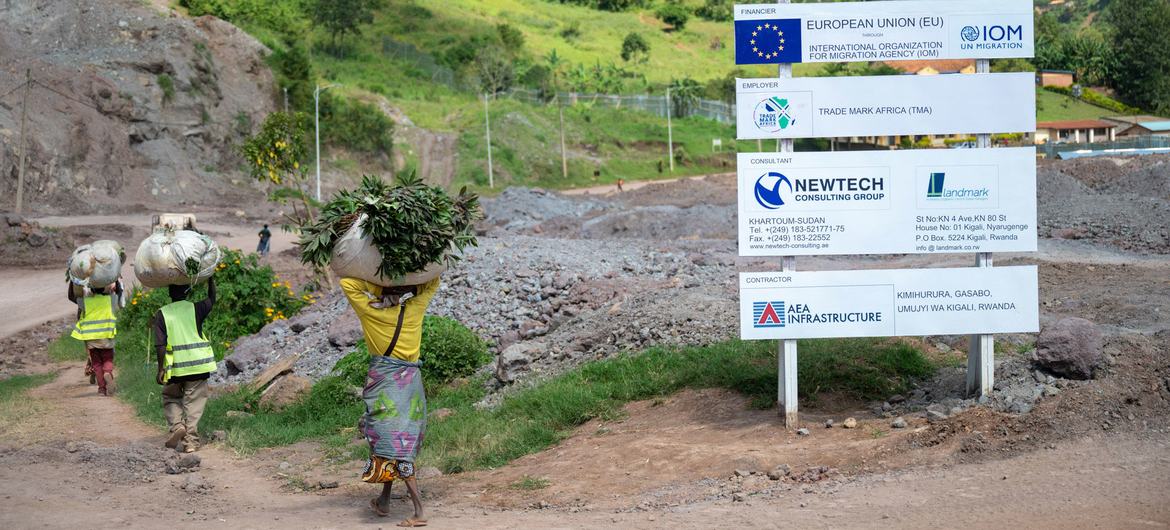
Traders carry goods across the border between Rwanda and Burundi.
Public debt crisis
Echoing Ms. Grynspan’s concerns, the President of the General Assembly, Annalena Baerbock, warned that developing country debt reached $31 billion last year.
This meant that instead of being able to invest in their people’s future “by building more schools or expanding healthcare facilities, many governments are instead spending precious funds on servicing debt.”
Trust in the international system is also “eroding”, the UN General Assembly President continued. She noted that even though the global economy is worth more than $100 trillion a year, one in two people have seen “little or no rise in their income for a generation.”


