


According to the agency’s latest surveillance report, antibiotic resistance rose in more than 40 per cent of the bacteria-drug combinations tracked between 2018 and 2023, with average annual increases ranging from 5 to 15 per cent.
“Antimicrobial resistance is outpacing advances in modern medicine, threatening the health of families worldwide,” said WHO Director-General Tedros Adhanom Ghebreyesus.
“As countries strengthen their AMR surveillance systems, we must use antibiotics responsibly and make sure everyone has access to the right medicines, quality-assured diagnostics and vaccines.”
A ‘silent pandemic’
The report, based on data from over 100 countries, offers the most comprehensive picture yet of the scale of the problem. It found that one in three infections in WHO’s South-East Asia and Eastern Mediterranean regions were resistant to antibiotics, compared with one in five in Africa.
Antimicrobial resistance (AMR) occurs when bacteria, viruses, fungi and parasites evolve to withstand the drugs designed to kill them. This makes infections harder to treat, increases the risk of severe illness or death, and threatens decades of medical progress.
The phenomenon – often described as a “silent pandemic” – is driven by the misuse and overuse of antibiotics in humans, animals and agriculture, as well as by poor infection control and limited access to quality medicines.
WHO estimates that bacterial AMR was directly responsible for 1.27 million deaths in 2019 and contributed to nearly five million deaths globally. Without action, experts warn, resistant infections could cause an estimated $3 trillion in global GDP losses per year by 2030.
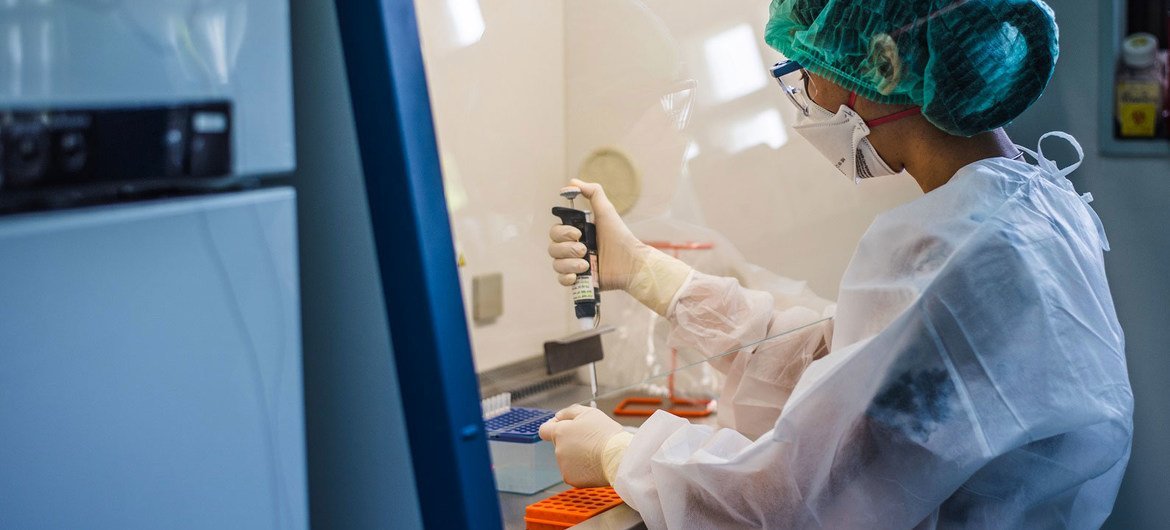
A scientist works at a research centre laboratory. (file)
The rise of ‘superbugs’
The report highlights that the greatest threat comes from Gram-negative bacteria – pathogens that are notoriously hard to kill and resistant to multiple drugs.
Among these, Escherichia coli (E.coli) and Klebsiella pneumoniae (K.pneumoniae), two common causes of bloodstream infections, are showing alarming levels of resistance to third-generation cephalosporins, the first-line treatment for many serious infections.
Globally, more than 40 per cent of E. coli and 55 per cent of K. pneumoniae strains were resistant to these antibiotics, with levels exceeding 70 per cent in parts of Africa. Other essential antibiotics, including carbapenems and fluoroquinolones, are also losing effectiveness against these and other pathogens including Salmonella and Acinetobacter.
Rising resistance is “forcing clinicians to turn to last-resort antibiotics,” the report warned. These treatments are costly, complex and often unavailable in lower-income countries, narrowing options and increasing risk of mortality.
Fragile systems, rising risks
The report also finds that resistance is most widespread in countries with weak health systems and limited surveillance capacity, underscoring a cycle in which poor data and fragile healthcare infrastructures fuel worsening outcomes.
While progress has been made in monitoring resistance, major data gaps persist. Country participation in the WHO surveillance system has increased more than four-fold since its launch in 2016, from 25 to 104 countries, but nearly half of WHO member States still did not report data in 2023.
Even among reporting countries, many lack the systems needed to generate reliable, representative data.
A call for coordinated action
The 2024 UN General Assembly’s political declaration on AMR reaffirmed global commitments to tackle resistance through a “One Health” approach that integrates human, animal and environmental health.
WHO said countries must now translate these commitments into concrete action.
“Our future depends on strengthening systems to prevent, diagnose and treat infections,” said Tedros. “We must also innovate with next-generation antibiotics and rapid point-of-care molecular tests.”


