


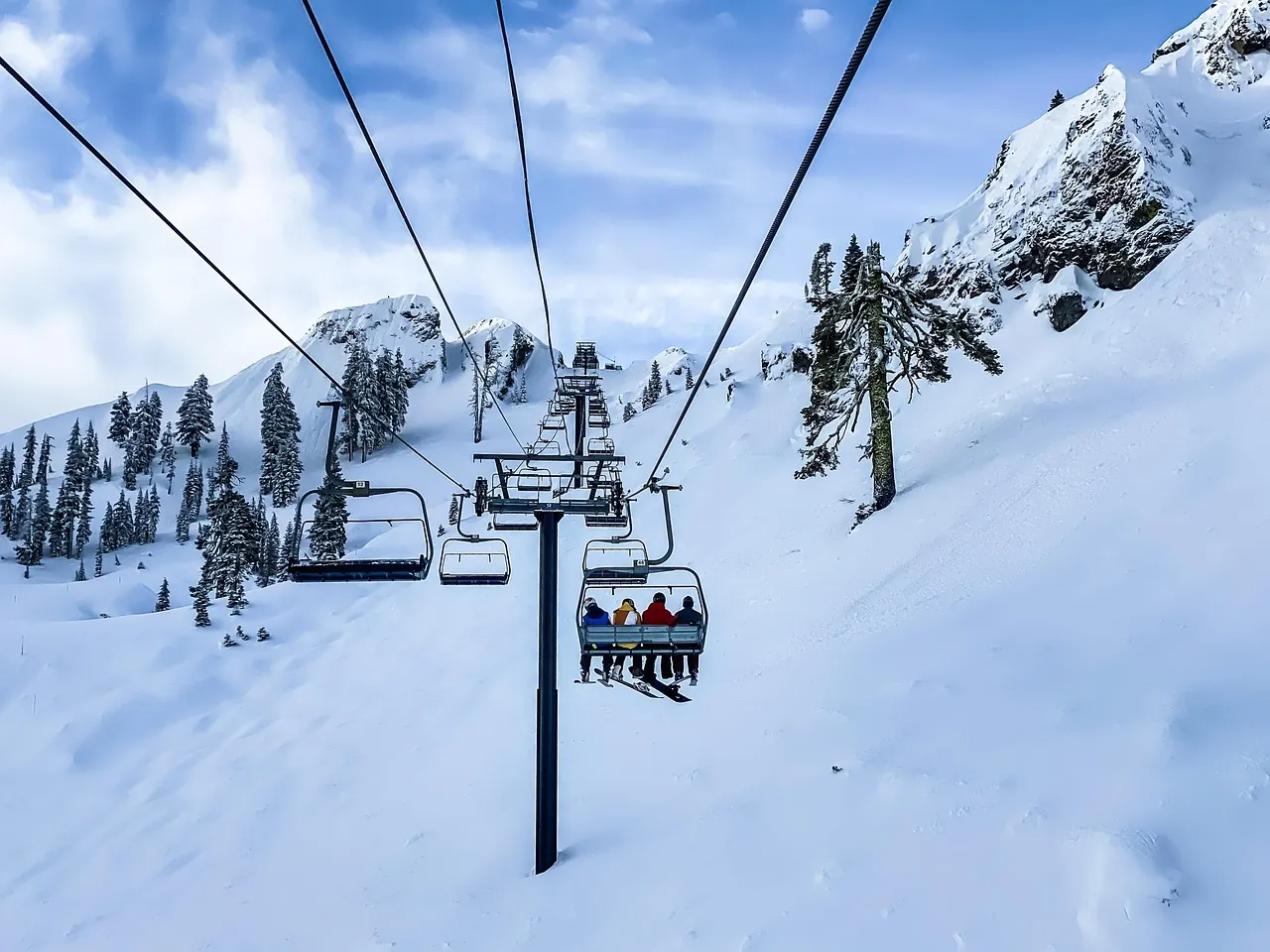
Skiing in the Swiss Alps will cost more this season; Zurich residents to benefit from lower public transport fares; and more news in our Tuesday roundup.
Skiing in Swiss Alps to become even more expensive
For the 2025/2026 season, winter sports enthusiasts will have to dig deeper into their pockets to hit the slopes.
Several ski domains have already announced higher prices for their season passes.
For instance, the Alps Pass, valid for the Adelboden-Lenk, Aletsch Arena, Engelberg-Titlis, and the Jungfrau Ski Region, will cost 949 francs for adults, if purchased in advance.
That is is 99 francs more per person than its predecessor, the Top 4 Ski Pass, which also included the Adelboden-Lenk, Gstaad, Jungfrau Ski Region, and Meiringen-Hasliberg areas.
Reasons cited for this price hike include resorts requiring significant investments in infrastructure, in addition to higher operating costs.
As a result, two out of three season passes will become more expensive.
Zurich residents to pay significantly less for public transport – but not just yet
Residents approved the initiative spearheaded by the Social Democratic Party calling for cheaper public transport fares.
In future, an annual season ticket for zone 110 in 2nd class will only cost 365 francs for adults – the equivalent of 1 franc per day. The current price is 809 francs, which means a hefty reduction of 444 francs.
The fare will also be much cheaper for children and young people: it will drop from the current price of 586 francs per year to 185 francs.
However, questions about the implementation of this measure remain.
For instance, the date for the introduction of the cheaper ticket system has not been set – mostly because municipal authorities don’t know where the 140 million francs a year needed to implement this measure should come from.
Advertisement
And there is more news regarding Zurich public transport…
Google Maps introduces a new feature for public transport users
When traveling by train, the Google Maps app now indicates which entrances and exits to use at certain stations and where to board the train – front, middle, or back – for quicker transfer or exit from the station.
The new information is displayed directly in the journey overview interface and aims to help passengers navigate stations with less hassle at peak travel hours.
However, this new feature is currently only available for Zurich S-Bahn trains that go through specific stations, though it could potentially be expanded in the future.
Advertisement
Swiss GDP increased in 2024
Switzerland’s Gross Domestic Product grew by 1.4 percent last year, in comparison to 2023.
In monetary terms, the GDP amounted to 854 billion francs, according to new data from the Federal Statistical Office (FSO).
Household consumption – up by 2.4 percent – was the main driver for growth in the Swiss economy in 2024, which was also fuelled by foreign trade.
In 2025, however, the GDP is expected to grow at a below-average rate, with forecasts ranging from 1.1 to 1.3 percent, due to higher US tariffs.
If you have any questions about life in Switzerland, ideas for articles or news tips for The Local, please get in touch with us at news@thelocal.ch


