


The Swiss government intends to continue reducing the state budget by cutting its spending in various areas. This could lead to a rise in the cost of university tuition fees and public transport.
The fiscally-savvy Federal Council is careful not to spend more money than it makes, but at times- as now – balancing the budget is a challenge requiring cost-cutting measures.
“A budgetary imbalance is looming,” the government said. “With spending increasing significantly faster than revenue, the constitutional requirements of the debt brake will no longer be met if no action is taken.”
The ‘debt brake’ is a mechanism designed to prevent chronic deficits and keep federal debt from soaring.
Just as it is for private spending, the government must be careful not to exceed the set ‘expenditure ceiling.’
As any other piece of legislation that’s in force in Switzerland, this law was also approved by Swiss voters: 85 percent accepted the constitutional provision on the debt brake in 2001.
READ ALSO: What is Switzerland’s debt brake and how does it affect residents?
How much, and where, does the government want to save?
For the next three years “the relief program will reduce federal finances by 2.4 billion francs in 2027, 3 billion in 2028, and 3.1 billion in 2029,” the Federal Council pointed out..
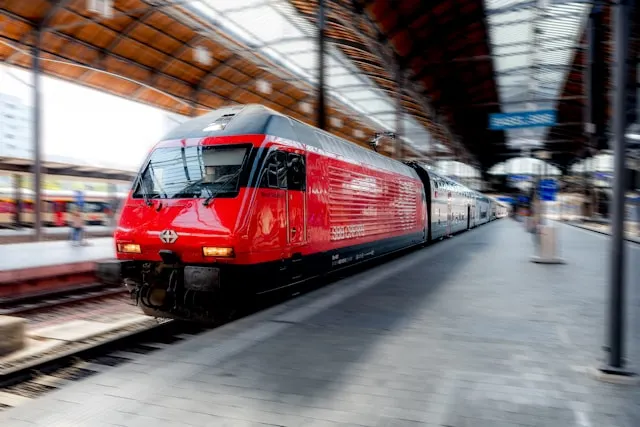
Among the planned reductions is the contribution to public transport: the share of costs covered by the federal government will decrease.
Instead, the SBB and other transport companies will either have to save money or compensate for lower government funding elsewhere – for instance, by charging commuters higher prices.
“It will be up to them to determine the extent to which it is necessary to increase their own funding,” the Federal Council said.
Advertisement
Higher student fees too
Further, the Federal Council wants to reduce its subsidies to universities, suggesting the funding shortfall could be made up by increasing tuition fees.
Concretely, additional revenue could be generated by universities “doubling fees for domestic students and quadrupling them for foreign ones,” the government said.
New foreign students at Switzerland’s two polytechnic institutes – in Zurich and Lausanne – already pay triple fees for their tuition from the September 2025 academic year.


