


Brussels is seeking a complete ban on imports of Russian liquefied natural gas (LNG) by the beginning of 2027, bringing forward previous plans to phase them out by the end of that year, in proposals for the European Union’s 19th sanctions package against Russia outlined by senior officials on September 19.
The plans, which need to be approved unanimously by member states, also envisage blacklisting a further 118 vessels in Russia’s shadow fleet, used to circumvent restrictions on oil exports, and measures against individuals involved in the indoctrination of Ukrainian children abducted by Russia.
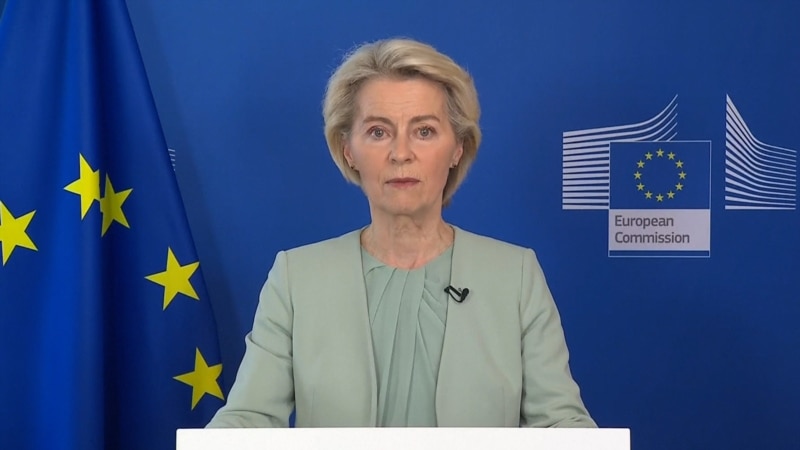
“Over the past month, Russia has shown the full extent of its contempt for diplomacy and international law,” European Commission President Ursula von der Leyen said in a prerecorded video address released on September 19.
Noting mass Russian drone and missile strikes on Ukraine that also hit the EU’s representative office in Kyiv, along with Russian drone incursions into EU members Poland and Romania, she said: “Again and again, President Putin has escalated, and in response, Europe is increasing its pressure. This is why today I’m presenting the 19th package of sanctions.”
Von der Leyen said the main emphasis was on hitting Russia’s fossil fuel revenues, which drive its war in Ukraine. “It’s time to turn off the tap,” she said, noting that 560 ships in the shadow fleet were now sanctioned.
She also announced a full transaction ban on Russian energy giants Rosneft and Gazprom-Neft, scrapping exemptions they had to earlier sanctions.
Pressure From Trump
The moves come as the EU has come under pressure from US President Donald Trump to squeeze Russia tighter as a condition for Washington to take punitive measures such as sanctions or tariff hikes aimed at forcing Russian President Vladimir Putin to come to the negotiating table.
In particular, Trump has called for European countries to stop Russian oil imports. Only Hungary and Slovakia do so. Neither has voiced any willingness to stop, but existing EU plans foresee an EU-wide ban on oil imports from Moscow by 2027.
This would be achieved using internal market rules, meaning the decision could not be vetoed.
The proposals outlined on September 19 require unanimity. Previous sanctions packages have undergone numerous amendments as Hungary, which has close ties to Russia, has sought to water them down.
“Our sanctions bite,” said EU foreign policy chief Kaja Kallas in a statement also released on September 19. “They have a visible impact on Russia’s public finances and economic growth. The European Union must reinforce these efforts collectively with its partners until peace is achieved.”
Other key items in the new proposals are a full transaction ban on Russian banks and financial institutions, including those operating in third countries, a ban on investments in Russian Special Economic Zones linked to the war, and further measures on Chinese actors supporting Russia’s military industry.
“These new sanctions will also squeeze Russia’s access to technologies including AI and geospatial data, as well as critical resources that feed weapons production. This includes those received from foreign suppliers including China and India,” Kallas said.
For the first time, the EU would also sanction platforms and include a prohibition on transactions in cryptocurrencies.
Putin ‘Stringing Us Along’
Hours before the package was announced, the outgoing head of Britain’s Secret Intelligence Service, or MI6 as it is more commonly known, said Russia had no desire for peace in Ukraine.
Richard Moore, who steps down at the end of September, was speaking at the UK Consulate in Istanbul.
He said there was “absolutely no evidence” Russian President Vladimir Putin wanted to genuinely negotiate, and that the Kremlin’s engagement in talks so far was simply “stringing us along” while it continued its war of aggression in Ukraine.
“The issue has, and has always been, sovereignty. Putin denies Ukraine’s sovereignty and its very existence as a country and a nation,” he warned.


