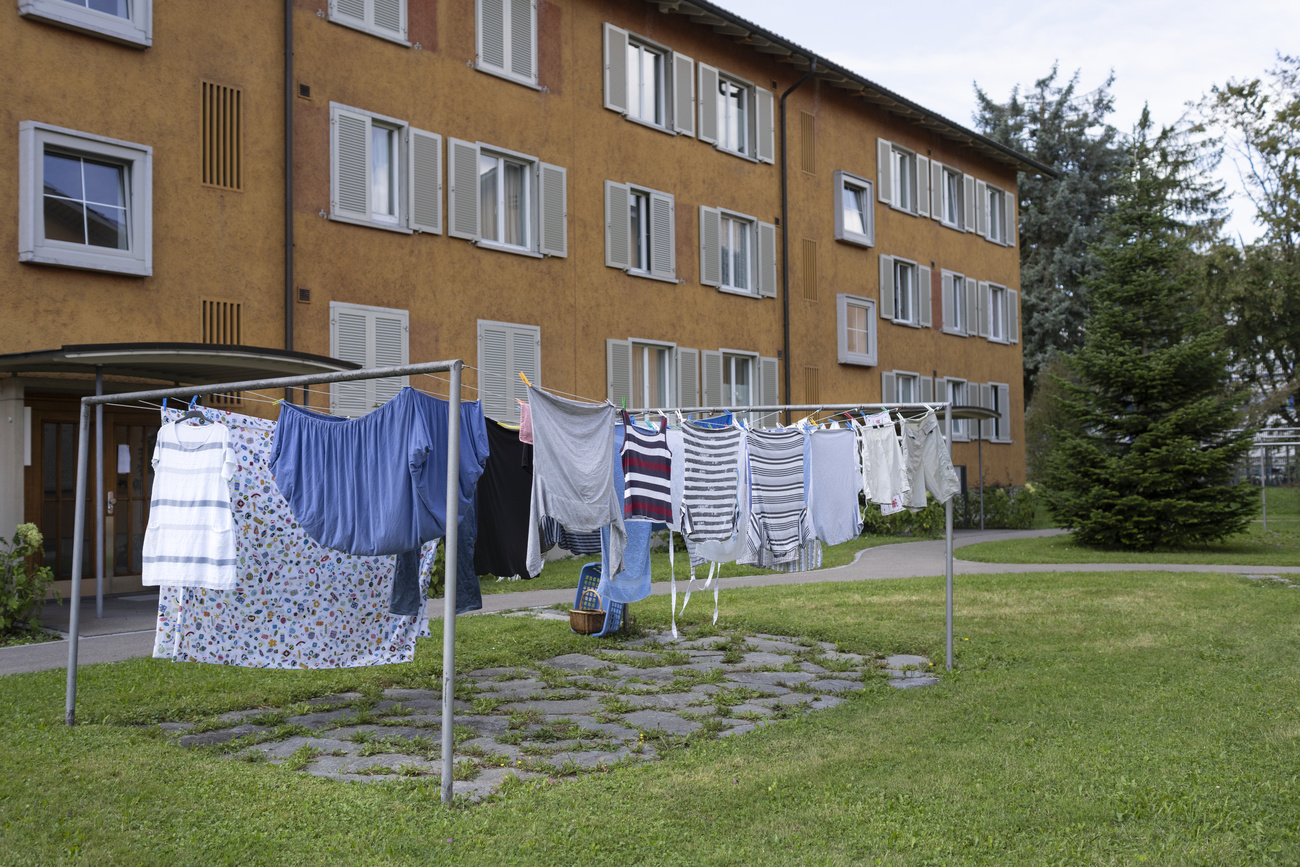
Housing construction is unlikely to keep pace with household growth over the next two years.
Keystone-SDA
Generated with artificial intelligence.
The housing shortage in Switzerland worsened in the first half of 2025, despite the slowdown in immigration over the past year. Low-income and lower-middle-class households are the hardest hit.
This content was published on
The situation is as tense as it was in 2014, when the last persistent shortage began, according to the latest monitoring update from the Federal Housing Office, published on Thursday. It also indicates that no easing is in sight in the medium term.
The office notes that housing construction is unlikely to keep pace with household growth over the next two years.
The monitoring also points out that becoming a homeowner is now virtually out of reach for first-time buyers, if the costs of acquisition and use are taken into account. This makes the rental market all the more important, particularly for households with low to medium purchasing power, according to the office. They account for almost 80% of all tenant households.
The monitoring also shows that there is a certain balance between lower-income households and their housing. Around 80% of housing is affordable for these groups, except in Geneva, Lausanne, Basel, Lucerne and Zurich.
However, the situation is more complicated when it comes to the housing currently available on the market. Only 41% of rental properties are affordable for households with low to medium purchasing power, said the federal housing office.
The shortage varies in severity depending on the region. The situation is particularly critical in St. Moritz, but also in large cities and agglomerations. Monitoring shows that if all households with low to medium purchasing power were forced to move under current market conditions, their average rental costs would rise from 29.1% to 35.7% of their income.
Situation not yet alarming
The housing office estimates that the situation is not yet alarming in terms of the housing stock. However, the office notes signs of deterioration, particularly among low-income households. The proportion of tenant households whose housing costs exceed their budget increased by 0.2 points between 2022 and 2023, to 2.8%. This figure remains lower than in 2018, however.
More
More
Demographics
Wealthy Switzerland is a country of tenants
This content was published on
Why do most people in Switzerland live in rented accommodation?
The housing office estimates that this trend will continue and notes the gap between rents for existing leases and rents offered on the market is also continuing to widen. The office believes that this is prompting investors to favour demolition and reconstruction or total renovation. This practice helps to maintain a high level of activity in the construction sector, but does not contribute to the necessary expansion of the housing stock in Switzerland.
Translated from French with DeepL/gw
We select the most relevant news for an international audience and use automatic translation tools to translate them into English. A journalist then reviews the translation for clarity and accuracy before publication.
Providing you with automatically translated news gives us the time to write more in-depth articles. The news stories we select have been written and carefully fact-checked by an external editorial team from news agencies such as Bloomberg or Keystone.
If you have any questions about how we work, write to us at english@swissinfo.ch.
More
Tourism Trends
Switzerland Tourism expects solid visitor numbers in autumn
This content was published on
Many Swiss resorts are extending their opening times over the autumn, allowing visitor numbers to increase overtime.
Council of Europe lauds Swiss framework on emissions targets
This content was published on
The Council of Europe has commended Switzerland for putting in place a comprehensive legislative framework following the 2024 ruling on climate inaction by the European Court of Human Rights.
Swiss doctors develop implant for spinal cord injury patients
This content was published on
An implant developed as a result of research carried out in Switzerland considerably improves the living conditions of people with spinal cord injuries, say the doctors behind this innovation.
Swiss pharma giant Roche is acquiring the California-based liver and cardiovascular disorders specialist 89bio for an initial sum of $2.4 billion, with additional payments expected.