


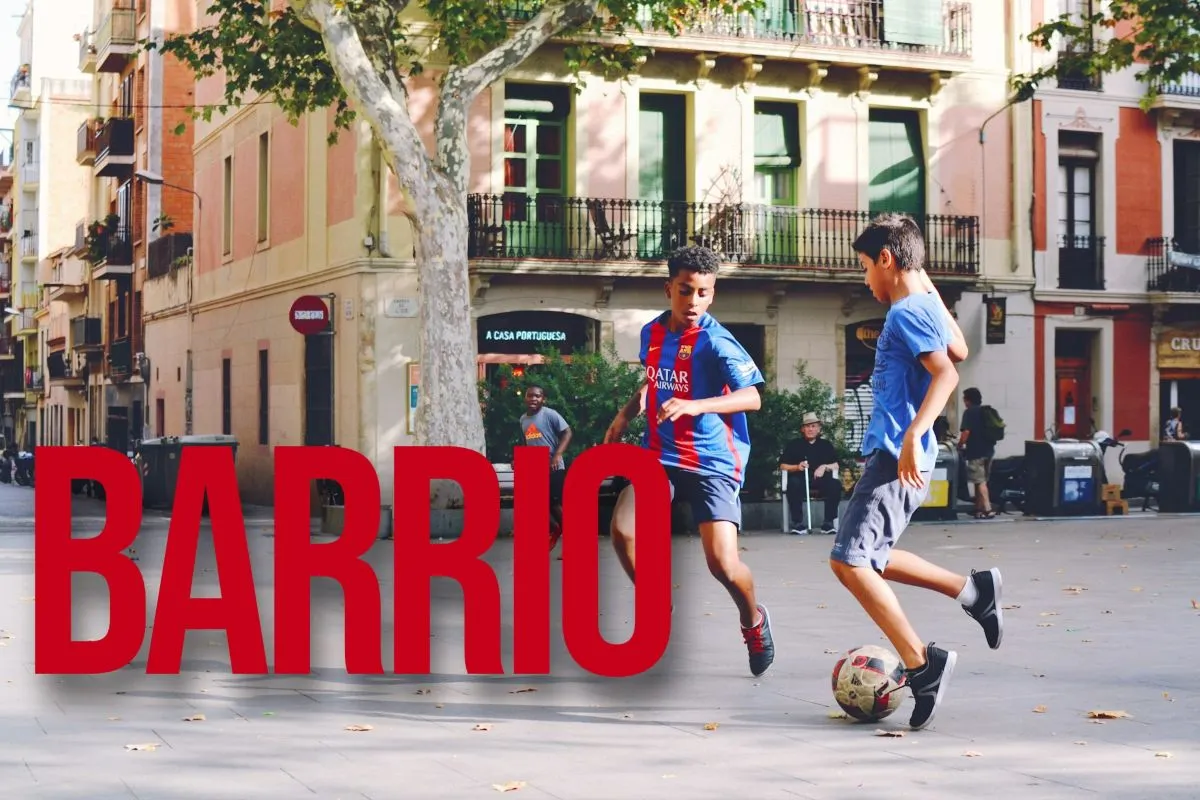
‘Barrio’ is a word you’ll hear all the time in Spanish, but not many foreigners are aware of the connotations that come with it.
Barrio is the Spanish word for neighbourhood. The word comes from the Hispanic Arabic bárri, meaning ‘outside’, and this is derived from the Arabic barrī, meaning ‘wild’.
Even though barrio is the most common way to refer to a district of a city or a town, the word is often linked to more humble parts of a city.
For example, there’s the expression ser de barrio, a bit like saying ‘to be from the hood’.
Advertisement
It implies that you’re from a closely-knit neighbourhood where everyone knows each other, where kids grow up ‘in the streets’, more so than in affluent areas.
A working-class neighbourhood is called a barrio popular or barrio obrero. People living in these neighbourhoods will often be called gente de barrio. A local grocery store will be called una tienda de barrio, a neighbourhood bar un bar de barrio.
There’s actually a famous Spanish flamenco singer called El Barrio, who chose that stage name to honour his neighbourhood in Cádiz.
If you want to specifically say that a neighbourhood is dodgy or a bit rough around the edges, you may call it un barrio bajo, or even un barrio de mala muerte (literally ‘a neighbourhood of bad death’).
There’s even the pejorative adjective barriobajero, which describes something or someone that’s considered trashy or common. If used to describe a person, it’s similar to saying trailer trash in American English.
A more politically correct way of referring to this type of neighbourhood may be to call it una barriada, which is a neighbourhood that tends to be on the outskirts of a city and is made up of low-quality buildings.
There’s also the term barrio marginal, a neighbourhood on the fringes of society, for example a slum. This can also be called a barrio de chabolas if it’s more like a shanty town.
Then again, barrio can be used to describe other types of neighbourhoods. You can say un barrio pijo (a posh neighbourhood), el barrio histórico (the old quarter), barrio industrial (industrial neighbourhood) or barrio chino (Chinatown).
If someone’s the talk of the town, in Spanish you say they are la comidilla del barrio.
There’s also the expression el otro barrio to refer to the afterlife or the great unknown, so if you ‘send someone to the other neighbourhood’ in Spanish (mandar al otro barrio), it means that you kill them, or if they’ve simply ‘gone to the other neighbourhood’ (irse al otro barrio), they’ve passed away.
Examples:
Me crié en un barrio obrero en el que todo el mundo se conocía.
I grew up in a working-class neighbourhood in which everybody knew each other.
Un accidente de moto le mandó al otro barrio.
A motorbike accident landed him six foot under.
La Juani parece bastante barriobajera ya que siempre va vestida de chándal y tiene muchos tatuajes.
Juani seems quite trailer trash as she’s always wearing a tracksuit and has lots of tattoos.


